
Advanced minimally invasive procedures for structural heart conditions
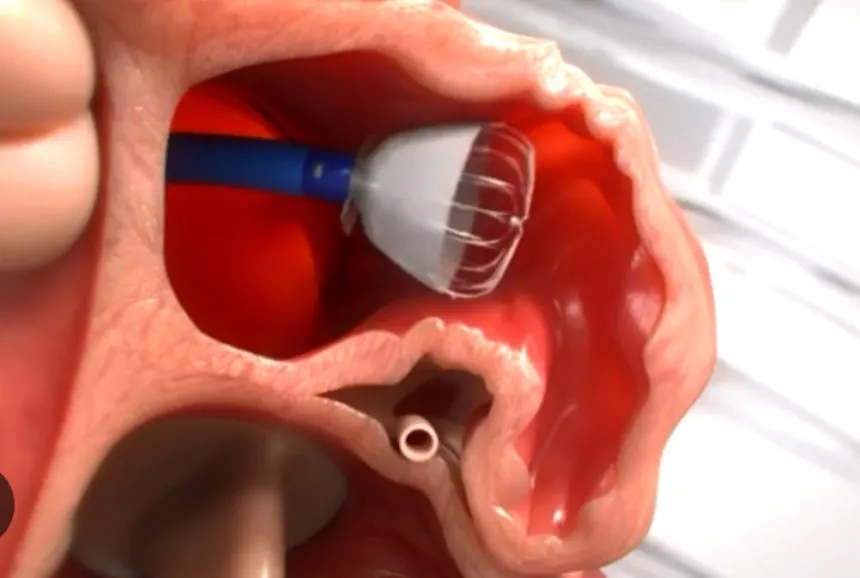
Left Atrial Appendage (LAA) Closure is a minimally invasive heart procedure used to reduce the risk of stroke in selected patients with atrial fibrillation (AF), particularly those who have an increased risk of stroke and are unable to take long-term blood-thinning medication safely. The left atrial appendage is a small, pouch-like structure attached to the upper left chamber of the heart. In people with atrial fibrillation, blood can become stagnant inside this pouch, increasing the possibility of blood clot formation. If a clot leaves the appendage and travels to the brain, it can cause an ischaemic stroke.
During LAA closure, a specially designed device is placed inside the left atrial appendage through a catheter, usually introduced through a blood vessel in the groin. The device seals off the appendage and helps prevent blood clots from escaping into the bloodstream. Because the procedure is performed through a catheter rather than traditional open-heart surgery, recovery is generally less extensive. LAA closure is considered only after a detailed assessment of the patient’s stroke risk, bleeding risk, atrial fibrillation and suitability for the procedure.
Left atrial appendage closure is not performed because of a separate disease affecting the appendage itself. Instead, it is primarily considered in patients with atrial fibrillation, particularly non-valvular atrial fibrillation, where the irregular heart rhythm can cause blood to pool within the left atrial appendage. Reduced movement of blood in this area can encourage clot formation and increase the risk of stroke.
Atrial fibrillation can develop for several reasons, including increasing age, high blood pressure, coronary artery disease, heart valve disease, heart failure and other structural or electrical abnormalities of the heart. Some patients may also develop AF without a clearly identifiable underlying cause. When a patient has both a significant risk of stroke and concerns about long-term anticoagulant therapy, LAA closure may be considered as an alternative strategy for reducing stroke risk in appropriately selected cases.
The left atrial appendage itself generally does not produce specific symptoms. Symptoms experienced by patients are usually related to the underlying atrial fibrillation or other cardiovascular condition. Atrial fibrillation may cause a sensation of rapid or irregular heartbeat, palpitations, fatigue, weakness, shortness of breath, dizziness or reduced ability to exercise. Some patients, however, may have AF without noticeable symptoms.
The major concern associated with AF is the increased risk of blood clot formation and stroke. A stroke may cause sudden weakness or numbness, difficulty speaking, facial drooping, confusion, loss of vision or problems with balance and coordination. Because atrial fibrillation can sometimes be silent, appropriate cardiac evaluation is important, particularly in individuals with risk factors for AF or stroke.
Before considering LAA closure, a comprehensive cardiovascular assessment is performed. This generally includes evaluation of the patient’s heart rhythm, medical history, stroke risk, bleeding risk and previous or current use of anticoagulant medication. An electrocardiogram and other cardiac monitoring techniques may be used to confirm atrial fibrillation and assess the heart’s rhythm.
Detailed imaging of the left atrial appendage is particularly important when planning the procedure. Transesophageal echocardiography (TEE) can provide high-quality images of the appendage and help identify any existing blood clot. Cardiac CT may also be used in selected patients to assess the anatomy and dimensions of the appendage. These investigations help determine whether the patient is anatomically suitable for LAA closure and assist in selecting the appropriate closure device.
Stroke prevention in atrial fibrillation commonly involves anticoagulant medications that reduce the ability of blood to form clots. For many patients, anticoagulation remains an effective and appropriate treatment. However, some individuals have a high risk of serious bleeding, a history of significant bleeding or other reasons that make long-term anticoagulant therapy unsuitable. In carefully selected patients, LAA closure may provide an alternative approach to reducing stroke risk.
During transcatheter LAA closure, a catheter is introduced through a vein, typically in the groin, and advanced into the heart. The closure device is carefully positioned inside the left atrial appendage and expanded to seal its opening. Over time, heart tissue grows over the device, helping isolate the appendage from the main circulation. The procedure is performed under appropriate imaging guidance, and the choice of device and treatment strategy is individualized according to the patient’s anatomy and clinical needs.
After LAA closure, patients are monitored to ensure that the heart rhythm, catheter access site and position of the closure device are satisfactory. Medication is generally prescribed for a period following the procedure to reduce the risk of blood clot formation while the device becomes incorporated into the heart tissue. The exact combination and duration of anticoagulant or antiplatelet therapy depend on the patient’s individual circumstances and the recommendations of the treating cardiologist.
Follow-up imaging is an important part of post-procedure care. A transesophageal echocardiogram or other appropriate imaging test may be performed after the procedure to assess the device, confirm effective sealing of the left atrial appendage and check for complications. Patients should follow medication instructions carefully, attend scheduled appointments and gradually resume normal physical activity according to their doctor’s advice.
Left atrial appendage closure is a minimally invasive procedure, but it carries potential risks. These can include bleeding or bruising at the catheter access site, blood-vessel complications, infection, abnormal heart rhythms and blood clot formation. In uncommon cases, complications involving the heart or surrounding structures may occur, including pericardial effusion or injury to cardiac tissue. There is also a possibility of incomplete sealing or a small residual flow around the device, which may require continued monitoring.
Although uncommon, serious complications such as stroke or device-related blood clot can occur. The overall risk depends on the patient’s age, general health, heart condition, anatomy of the left atrial appendage and other medical factors. Careful pre-procedure evaluation, appropriate imaging, experienced procedural care and structured follow-up are important for achieving a safe and effective outcome.
Patients with atrial fibrillation should discuss stroke prevention with a cardiologist, particularly if they have additional risk factors such as increasing age, high blood pressure, diabetes, heart failure or a previous stroke. Individuals who experience recurrent bleeding or other significant problems while taking blood-thinning medication should also discuss their treatment options with their doctor rather than stopping medication independently.
After LAA closure, medical attention should be sought for persistent or worsening chest discomfort, severe breathlessness, fainting, significant bleeding, new neurological symptoms or sustained rapid or irregular heartbeats. Sudden facial drooping, weakness or numbness on one side of the body, difficulty speaking, sudden vision changes or severe loss of balance may indicate a stroke and require immediate emergency medical care. Early evaluation and individualized treatment planning can help reduce the risk of serious complications associated with atrial fibrillation.
Explore More: Balloon Valvuloplasty

Providing advanced, compassionate and evidence-based cardiac care with a focus on interventional cardiology, structural heart procedures and comprehensive heart health.
9:00 AM – 6:00 PM (By Appointment Only)
No WhatsApp Number Found!
WhatsApp us