
Advanced cardiac procedures
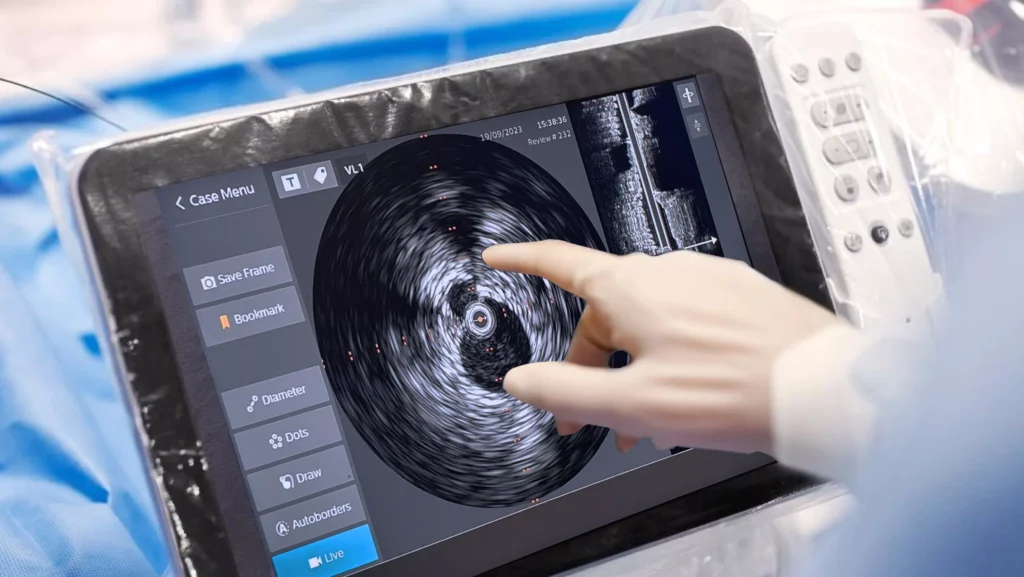
Intravascular Ultrasound (IVUS) is an advanced imaging technique used to examine the inside of blood vessels, particularly the coronary arteries. Unlike conventional imaging that provides an external view of the blood vessels, IVUS uses a miniature ultrasound probe mounted on a thin catheter to create detailed images from within the artery. This allows the cardiologist to assess the size of the artery, the thickness of the arterial wall, the extent of plaque buildup, and the severity of narrowing with greater precision. IVUS is especially valuable during coronary angioplasty and stent procedures, helping guide treatment and assess whether a stent has been positioned and expanded appropriately.
IVUS is not a treatment for a specific disease itself but an imaging procedure commonly used when there is concern about coronary artery disease or other abnormalities within the blood vessels. Atherosclerosis, in which fatty deposits and cholesterol accumulate inside the arterial walls, is one of the most common reasons for requiring detailed assessment. Conditions such as significant coronary artery narrowing, complex arterial plaques, unexplained findings on coronary angiography, or suspected stent-related problems may also lead a cardiologist to recommend IVUS. The procedure can provide additional information when conventional angiography does not clearly show the extent or nature of a blockage.
The symptoms that lead to an IVUS assessment generally arise from the underlying cardiovascular condition rather than from IVUS itself. Patients with coronary artery disease may experience chest discomfort or pressure, shortness of breath, unusual fatigue, reduced exercise tolerance, or discomfort that may spread to the arm, shoulder, neck, jaw, or back. Some individuals, particularly those with diabetes or other risk factors, may have coronary artery disease without obvious symptoms. In such cases, further investigation may be recommended based on other test results or clinical findings.
IVUS is usually performed as part of a cardiac catheterisation procedure and is often used alongside coronary angiography. After a thin catheter is guided through a blood vessel to the coronary arteries, the miniature ultrasound transducer produces real-time images of the artery from the inside. These images help the cardiologist evaluate plaque characteristics, vessel diameter, lesion length, and the degree of narrowing. IVUS can also be particularly useful during coronary stent placement because it allows the doctor to determine whether the stent has adequately expanded and is properly positioned against the vessel wall.
IVUS itself is an imaging and treatment-guidance technique rather than a standalone treatment. Its findings can help the cardiologist select the most appropriate management for the patient. Depending on the condition, treatment may include lifestyle modifications and medications to control cholesterol, blood pressure, diabetes, or other cardiovascular risk factors. When significant coronary artery narrowing requires an intervention, IVUS may be used to guide balloon angioplasty and stent placement and to optimise the final result. In selected complex cases, the information obtained through IVUS can help the cardiology team make more precise decisions about the size, length, and placement of a coronary stent.
After an IVUS-guided coronary procedure, recovery depends on the overall treatment performed and the patient’s medical condition. Patients are generally monitored for a period after catheterisation, with particular attention to the access site for signs of bleeding or swelling. If a coronary stent has been placed, prescribed antiplatelet medications should be taken exactly as directed to reduce the risk of clot formation. Maintaining a heart-healthy lifestyle, attending scheduled follow-up appointments, managing blood pressure and cholesterol, avoiding tobacco, and following the recommended diet and physical activity plan are important for long-term cardiovascular health.
IVUS is generally considered a safe procedure when performed by an experienced cardiac team, but, like any invasive catheter-based procedure, it carries some risks. These may include bleeding or bruising at the catheter insertion site, infection, temporary changes in heart rhythm, blood vessel injury, or an allergic reaction to contrast material when contrast is used as part of the overall procedure. Rarely, more serious complications such as arterial damage, blood clot formation, heart attack, or other cardiovascular events can occur. Your cardiologist will assess your individual health and explain the potential benefits and risks before the procedure.
You should consult a cardiologist if you experience persistent or recurrent chest pain, pressure or tightness, unexplained breathlessness, unusual fatigue, dizziness, or reduced tolerance for physical activity, particularly if you have risk factors for coronary artery disease. Patients who have already undergone coronary angioplasty or stent placement may also require further evaluation if symptoms return or follow-up tests suggest a possible problem with the treated artery. Intravascular Ultrasound (IVUS) can provide valuable information in these situations and help your cardiologist determine the most appropriate course of care. If chest pain is severe, sudden, or accompanied by difficulty breathing, sweating, fainting, or pain spreading to the arm, jaw, back, or shoulder, seek emergency medical attention immediately.## Intravascular Ultrasound (IVUS)
Explore More: Optical Coherence Tomography (OCT)

Providing advanced, compassionate and evidence-based cardiac care with a focus on interventional cardiology, structural heart procedures and comprehensive heart health.
9:00 AM – 6:00 PM (By Appointment Only)
No WhatsApp Number Found!
WhatsApp us