Advanced minimally invasive procedures for structural heart conditions
Stress echocardiography is a non-invasive cardiac imaging test that evaluates how well the heart functions when it is working harder than usual. Unlike a routine echocardiogram, which examines the heart at rest, a stress echocardiogram assesses the heart’s response to increased demand, helping doctors identify changes in heart muscle movement and blood flow that may not be apparent when the heart is resting. It is commonly used as part of the evaluation for suspected or known coronary artery disease and can provide valuable information about overall cardiac function.
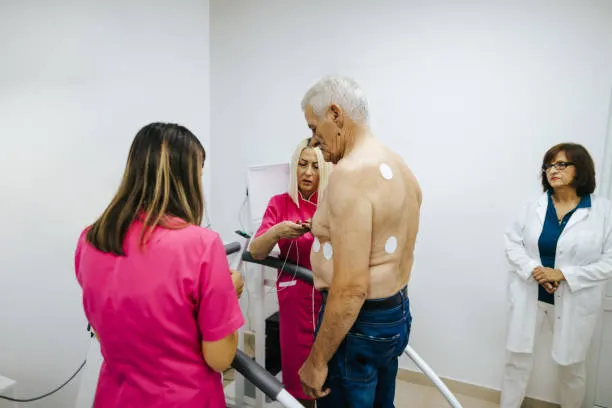
During the test, ultrasound images of the heart are obtained before and after the heart is made to work harder. This is usually achieved through controlled physical exercise, such as walking on a treadmill or using a stationary bicycle. When a patient is unable to exercise adequately, medication may be used to increase the heart rate and workload in a controlled clinical setting. Continuous monitoring allows the cardiology team to assess heart rate, blood pressure, symptoms and electrical activity alongside the echocardiographic findings.
Stress echocardiography does not diagnose a particular “cause” itself; rather, it is used to investigate conditions that may affect the heart’s ability to receive or pump blood adequately during increased activity. One of its most important applications is the evaluation of coronary artery disease, in which narrowing of the coronary arteries can restrict blood supply to the heart muscle, particularly when the heart requires more oxygen during exercise.
The test may also be useful in assessing certain heart valve disorders, unexplained symptoms such as exertional breathlessness or chest discomfort, and the functional significance of some structural heart abnormalities. In selected patients with known heart disease, stress echocardiography can help evaluate how the condition affects heart performance and assist the cardiologist in planning appropriate management.
Stress echocardiography is often recommended when symptoms suggest that the heart may not be receiving enough blood during physical activity. Common symptoms that may lead to evaluation include chest discomfort or pressure, shortness of breath during exertion, unusual fatigue, reduced exercise capacity, dizziness or palpitations. These symptoms may be caused by several different conditions, and a stress echocardiogram can help determine whether they are related to an underlying cardiovascular problem.
Some patients with coronary artery disease may have few or no symptoms, particularly in the early stages. A stress echocardiogram may therefore be considered when a patient’s medical history, risk factors or other cardiac test results suggest a need for further evaluation. The decision to perform the test is based on the individual’s clinical circumstances and overall cardiovascular risk.
Stress echocardiography combines ultrasound imaging with controlled cardiac stress. Before the test begins, a resting echocardiogram is performed to assess the heart chambers, valves and pumping function. Heart rate, blood pressure and electrocardiographic activity are also monitored. The patient then undergoes controlled exercise, or receives an appropriate medication when exercise is not possible.
Additional echocardiographic images are obtained while the heart is under stress and compared with the resting images. Areas of the heart muscle that receive inadequate blood supply may show changes in their movement during stress. The results are interpreted together with the patient’s symptoms, ECG findings, medical history and other relevant investigations. Depending on the findings, further testing such as coronary CT angiography, conventional coronary angiography or other cardiac investigations may be recommended.
Stress echocardiography is a diagnostic procedure rather than a treatment. Its findings can, however, play an important role in determining the most appropriate treatment strategy. If the examination suggests significant coronary artery disease, the cardiologist may recommend lifestyle modifications, medications to control cardiovascular risk factors or additional investigations to assess the coronary arteries in greater detail.
When significant heart disease is identified, treatment may range from medical management and supervised exercise or cardiac rehabilitation to procedures such as coronary angioplasty and stenting or bypass surgery in appropriately selected patients. For patients with heart valve disease or other structural heart conditions, the results may help guide decisions regarding continued monitoring, medication or an appropriate intervention. Treatment is always individualized according to the patient’s condition and overall health.
Because stress echocardiography is primarily a diagnostic test, most patients can return to their normal routine shortly after the examination. The medical team may recommend a brief period of observation after exercise or medication-induced stress, particularly if symptoms or changes in heart rhythm occurred during the test. Patients should discuss the results with their cardiologist to understand what the findings mean and whether additional evaluation is required.
If the stress echocardiogram identifies an underlying cardiovascular condition, follow-up care will depend on the diagnosis. This may include taking prescribed medications regularly, maintaining a heart-healthy lifestyle, controlling blood pressure, cholesterol and blood sugar, maintaining a healthy weight and attending recommended follow-up appointments. Patients should not alter or stop prescribed cardiac medications without medical advice.
Stress echocardiography is generally considered safe when performed under appropriate medical supervision. During exercise-based testing, some patients may temporarily experience fatigue, breathlessness, chest discomfort, dizziness or palpitations as the heart rate increases. These symptoms are monitored carefully, and the test can be stopped whenever medically necessary.
When medication is used to create cardiac stress, temporary effects such as a rapid heartbeat, changes in blood pressure, flushing, headache or abnormal heart rhythms may occur. Serious complications such as a significant cardiac event are uncommon but possible, particularly in patients with underlying heart disease. Continuous monitoring by trained medical professionals helps ensure that any concerning changes are recognized promptly.
Patients experiencing recurrent chest discomfort, unexplained breathlessness, unusual fatigue, dizziness, palpitations or a noticeable reduction in exercise tolerance should consider a cardiovascular evaluation, especially if they have risk factors such as high blood pressure, diabetes, high cholesterol, smoking history, obesity or a family history of heart disease. A cardiologist can determine whether stress echocardiography or another cardiac investigation is appropriate.
If severe or persistent chest pain, significant difficulty breathing, fainting, sudden sweating or other symptoms suggestive of a heart attack occur, emergency medical attention should be sought immediately rather than waiting for a scheduled diagnostic test. Early assessment of concerning symptoms can help identify cardiovascular disease at an appropriate stage and support timely treatment.
Explore More: Advanced Cardiac Imaging & Hemodynamic Assessment

Providing advanced, compassionate and evidence-based cardiac care with a focus on interventional cardiology, structural heart procedures and comprehensive heart health.
9:00 AM – 6:00 PM (By Appointment Only)
No WhatsApp Number Found!
WhatsApp us