
Advanced cardiac procedures
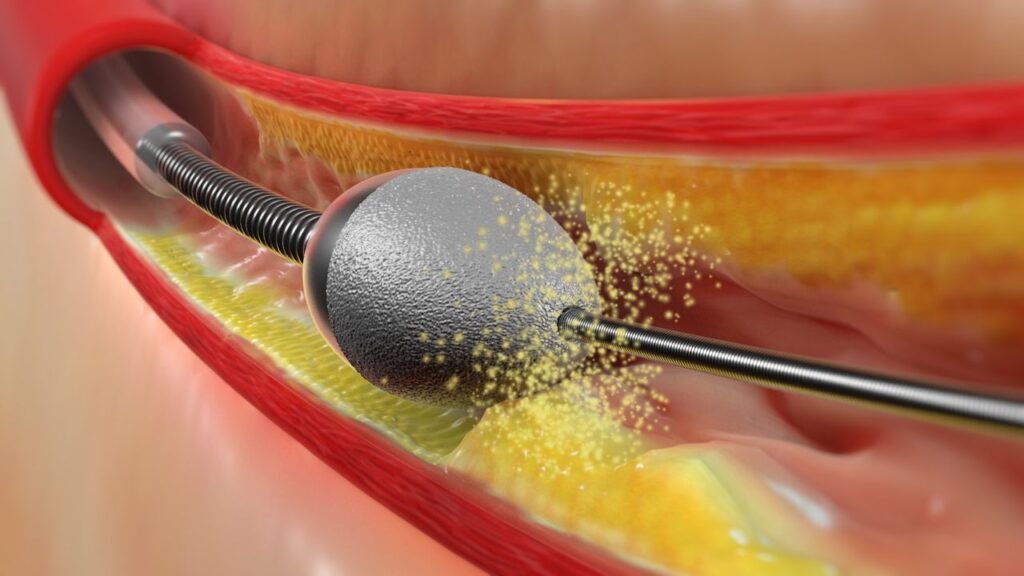
Rotational atherectomy is an advanced coronary intervention used to treat severely calcified or fibrotic blockages in the coronary arteries. During the procedure, a specialized catheter with a tiny rotating burr is carefully guided through the narrowed section of the artery. The burr modifies and removes hardened calcium from the plaque, creating a smoother pathway that can allow a balloon and coronary stent to be delivered and expanded more effectively. Rotational atherectomy is generally considered when heavy calcification makes conventional balloon angioplasty difficult or when adequate stent expansion may otherwise be challenging. Current interventional cardiology guidance recognizes plaque modification, including rotational atherectomy, as an important option for selected heavily calcified coronary lesions.
The need for rotational atherectomy usually develops from coronary artery disease with significant calcium buildup inside the arterial wall. Coronary calcification tends to occur as a part of atherosclerosis, in which fatty deposits and other materials accumulate within the arteries over time. Factors such as increasing age, diabetes, high blood pressure, high cholesterol, smoking, kidney disease, and a family history of cardiovascular disease can contribute to coronary artery disease and the development of calcified plaque. When calcium becomes extensive, it can make the artery rigid and difficult to treat with standard angioplasty or stenting alone.
Symptoms depend on the severity and location of the coronary blockage. Patients may experience chest pain or pressure, particularly during physical activity or emotional stress, along with shortness of breath, unusual tiredness, reduced exercise tolerance, or discomfort that may spread to the arm, shoulder, back, neck, or jaw. Some patients, particularly those with diabetes, may have few or no typical symptoms despite significant coronary artery disease. Severe or sudden symptoms such as persistent chest pressure, difficulty breathing, cold sweating, nausea, or fainting may indicate an acute cardiac emergency and require immediate medical attention.
Before considering rotational atherectomy, a cardiologist evaluates the patient’s symptoms, medical history, cardiovascular risk factors, and the anatomy of the coronary arteries. Tests may include an electrocardiogram, echocardiogram, stress testing, coronary CT angiography, or conventional coronary angiography depending on the clinical situation. During coronary intervention, intravascular imaging techniques such as intravascular ultrasound (IVUS) or optical coherence tomography (OCT) may help determine the extent, location, and characteristics of calcium and guide the choice of plaque-modification technique.
Treatment is individualized according to the severity of coronary artery disease, the degree of calcification, and the overall health of the patient. Depending on the findings, treatment may include lifestyle modification and medicines to control cholesterol, blood pressure, diabetes, and other cardiovascular risk factors. For suitable coronary blockages, percutaneous coronary intervention (PCI) may be performed. When a lesion is heavily calcified and difficult to cross or expand with conventional balloons, rotational atherectomy can be used to modify the calcium before balloon angioplasty and stent placement. Other calcium-modification approaches, including specialized balloons, orbital atherectomy, laser-based techniques, and intravascular lithotripsy, may also be considered when appropriate.
After rotational atherectomy and coronary stent treatment, careful follow-up is important for maintaining cardiovascular health and reducing the risk of future blockage. Patients should take prescribed medications exactly as directed, particularly antiplatelet medicines when a coronary stent has been placed. Maintaining a heart-healthy diet, staying physically active according to medical advice, avoiding tobacco, managing blood pressure and blood sugar, and controlling cholesterol are important parts of long-term care. Follow-up appointments allow the cardiologist to assess recovery, review medications, and address any new or recurring symptoms.
Rotational atherectomy is a specialized procedure and, like other coronary interventions, carries potential risks. Depending on the patient’s condition and the complexity of the coronary lesion, complications may include bleeding or bruising at the catheter insertion site, abnormal heart rhythms, blood-vessel injury, coronary artery dissection or perforation, blood-vessel blockage, heart attack, stroke, kidney-related complications from contrast dye, or the need for additional intervention. Heavily calcified coronary lesions themselves can increase procedural complexity and the risk of complications, which is why careful imaging, appropriate patient selection, and experienced procedural planning are important.
Patients with recurring chest discomfort, breathlessness during activity, unexplained fatigue, or reduced exercise capacity should consult a cardiologist for appropriate evaluation, particularly when cardiovascular risk factors are present. Patients who have already been diagnosed with significant coronary artery calcification or a complex coronary blockage may require assessment by an experienced interventional cardiologist to determine the most suitable treatment approach. Sudden or persistent chest pain or pressure, severe breathlessness, fainting, cold sweating, or pain spreading to the arm, back, neck, or jaw should be treated as an emergency and require immediate medical attention.
Explore More: Intravascular Lithotripsy

Providing advanced, compassionate and evidence-based cardiac care with a focus on interventional cardiology, structural heart procedures and comprehensive heart health.
9:00 AM – 6:00 PM (By Appointment Only)
No WhatsApp Number Found!
WhatsApp us